


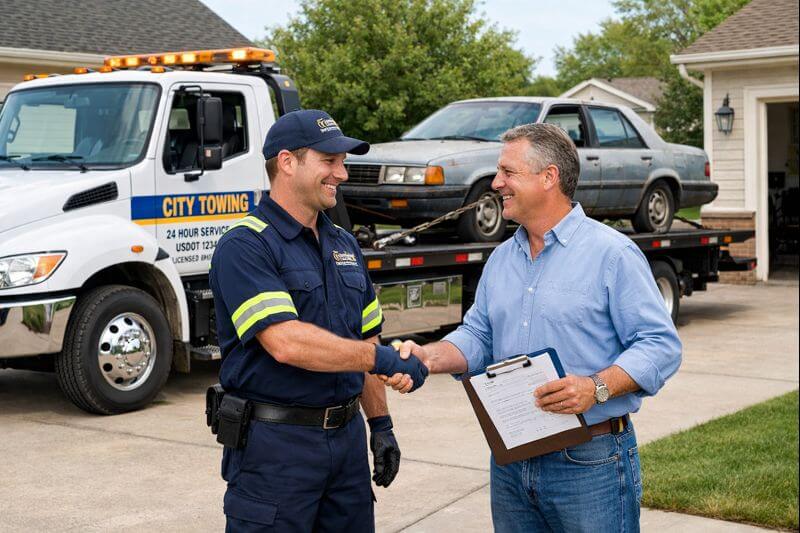
Finding a trustworthy vehicle removal service shouldn’t feel like navigating a minefield, yet many car owners end up dealing with hidden fees, no-show towing companies, or worse—outright scams. Whether you’re getting rid of an old banger that won’t start, a damaged car after an accident, or simply clearing space in your driveway, knowing how to identify legitimate car removal companies can save you time, money, and considerable frustration.
After years working alongside vehicle recyclers and auto salvage professionals, I’ve seen both sides of this industry. The good news? Reliable services absolutely exist. The challenge is knowing what separates them from operators who’ll promise free removal, then slap you with “towing fees” at the last minute or forge documents to take ownership of your vehicle.
This guide walks you through everything you need to know about finding legitimate vehicle removal services, protecting yourself legally, and getting fair value for your unwanted car.
What Makes a Vehicle Removal Service Legitimate?
A reliable car removal company operates with full transparency, proper licensing, and clear business practices. Here’s what distinguishes professional services from fly-by-night operators:
Proper licensing and insurance coverage.
Licensed car wreckers hold the necessary permits to tow vehicles and operate auto recycling facilities. They carry liability insurance protecting you if something goes wrong during removal. Ask directly: “What’s your business license number?” and “Are you insured for towing operations?” Legitimate companies answer immediately.
Physical business location.
Trustworthy services have an actual yard or facility, not just a mobile number. You should be able to find their address, visit their location if needed, and verify they’re established in your area. Google Maps reviews of their physical location often reveal valuable insights.
Transparent pricing with written quotes.
Professional vehicle removal services provide clear quotes upfront—no surprise deductions, no hidden “administrative fees” appearing after they’ve loaded your car. Everything should be confirmed in writing before the tow truck arrives.
Environmental compliance.
Legitimate auto recyclers follow environmental disposal standards for hazardous materials like oil, coolant, and batteries. They should explain how they handle vehicle recycling and parts recovery. This isn’t just good practice—it’s legally required in most regions.
Clear ownership transfer process.
Reliable companies know exactly what paperwork you need and handle title transfers properly. They’ll never pressure you to sign blank forms or skip documentation steps.
Red Flags That Signal an Unreliable Service
Recognizing warning signs early protects you from common vehicle removal scams:
- Vague or constantly changing quotes. If they won’t commit to a price until they see the car in person, then suddenly discover “issues” requiring fee deductions, walk away.
- Pressure to decide immediately. Phrases like “this offer expires in one hour” or “we can only pay this much today” are classic high-pressure tactics. Legitimate services understand you need time to compare options.
- No verifiable online presence. Missing website, no reviews anywhere, or only brand-new Google listings with generic 5-star reviews should raise concerns. Established companies have years of feedback.
- Requests to sign documents before removal. Never sign over your title until the vehicle is loaded and you’ve received payment. Some scammers collect signed titles, then disappear without removing the car.
- Unwillingness to show credentials. If they dodge questions about licensing, insurance, or business registration, that’s your cue to end the conversation.
- Cash-only operations with no receipt. While cash transactions aren’t inherently suspicious, refusing to provide any paper trail definitely is.
Step-by-Step: How to Find and Vet a Reliable Car Removal Company
Step 1: Research Local Licensed Vehicle Removal Services
Start with services that have established reputations in your area:
- Search for “[your city] licensed car wreckers” or “accredited vehicle removal services near me”
- Check your local consumer protection office or automotive industry association for registered businesses
- Ask for recommendations from mechanics, insurance agents, or friends who’ve recently scrapped vehicles
- Look for companies affiliated with auto recycling industry groups (these typically maintain higher standards)
Step 2: Verify Their Credentials
Before requesting quotes, confirm each company’s legitimacy:
Check their business registration. Most regions maintain searchable databases of licensed businesses. Verify the company name matches their registration exactly.
Review their insurance coverage. Ask for proof of liability insurance. Licensed towing operators should carry coverage protecting property damage during vehicle removal.
Research their environmental compliance. Do they mention proper disposal of hazardous materials? Are they registered with environmental protection agencies as authorized recyclers?
Examine their customer reviews carefully. Look beyond the star rating. Read what people actually say about payment accuracy, punctuality, and professionalism. Pay special attention to how companies respond to negative reviews—defensive or dismissive responses reveal their true character.
Step 3: Request Detailed Written Quotes
Contact at least three services for comparison. Provide identical information to each:
- Vehicle make, model, year, and condition
- Whether it runs or requires towing
- Your location and any access challenges
- Current registration status
Legitimate companies can provide reasonably accurate quotes based on this information. They should specify:
- Exact amount they’ll pay (if offering cash for cars)
- Any deductions or fees
- Whether towing is genuinely free
- Expected timeline for removal
- Payment method and timing
Get everything in writing via email or text—verbal promises mean nothing if disputes arise.
Step 4: Ask Critical Questions
Professional vehicle removal services answer these clearly:
“What documentation do I need for removal?” They should specify title requirements, identification, and registration paperwork. If they’re vague about documentation, that’s concerning.
“How do you determine vehicle value?” Reputable scrap car buyers explain their assessment process—weight, usable parts, metal prices, current demand. Mysterious “proprietary formulas” often hide lowball tactics.
“What happens if I can’t find my title?” Legitimate services know the legal process for removing vehicles without titles (which varies by region). They should never suggest ignoring title requirements.
“When exactly will you remove the vehicle?” Reliable companies commit to specific timeframes. Same-day car removal is possible, but promises of “immediately” often come with catches.
“How will I receive payment?” Confirm the method, timing, and amount. “Cash on pickup” should mean exactly that—not “we’ll mail a check in 2-3 weeks.”
Step 5: Review the Service Agreement Thoroughly
Before signing anything:
- Ensure all verbal promises appear in writing
- Verify the vehicle description is accurate
- Confirm the payment amount matches your quote
- Check that no unexpected fees or deductions appear
- Make sure you understand the ownership transfer process
- Keep a copy of everything you sign
Never sign blank documents or forms with missing information “to be filled in later.”
Step 6: Prepare for Vehicle Removal Day
Gather required documents:
- Vehicle title (or appropriate substitute documentation)
- Government-issued ID
- Registration paperwork
- Any service records (helpful but not essential)
Remove personal belongings. Check everywhere—glove box, trunk, under seats, sun visor holders. Once removed, recovering forgotten items becomes difficult or impossible.
Have license plates ready to remove. In most regions, you’ll keep your plates. The removal service should confirm local requirements.
Clear access to the vehicle. Ensure the tow truck can reach your car without obstacles. Last-minute access issues shouldn’t reduce your payment, but they can delay removal.
Don’t hand over the title until:
- The vehicle is loaded on the tow truck
- You’ve received payment in full
- You have copies of all signed documents
Understanding Free Towing Offers: Too Good to Be True?
Free towing services are common in the vehicle removal industry—and many are completely legitimate. Here’s how to distinguish genuine free towing from bait-and-switch schemes:
Legitimate free towing works like this: The company plans to recover value from your vehicle through parts resale, scrap metal, or recycling. Towing costs are simply absorbed as a business expense. They profit from the vehicle itself, not from charging you.
Scam “free towing” reveals itself through:
- Deductions appearing after they arrive (“We thought it ran, so we have to charge a non-runner fee”)
- Unexpected “administrative” or “processing” charges
- Reduced payment amounts not matching the original quote, with towing costs blamed
If a service advertises free towing, confirm explicitly: “Are there ANY circumstances where I’d pay towing fees or have deductions for towing?” Get their answer in writing.
What Documents Do You Actually Need?
Documentation requirements vary by location, but reliable vehicle removal services always explain exactly what you need. Here’s what’s typically required:
Certificate of title (ownership document). This proves you legally own the vehicle. Most regions won’t allow removal without it, though procedures exist for missing titles—legitimate services know these processes.
Government-issued identification. Your driver’s license or passport confirms you’re the person named on the title.
Current or recent registration. While not always mandatory, this helps verify ownership and vehicle details.
Lienholder release (if applicable). If you still owe money on the vehicle, you’ll need documentation proving the lien has been satisfied. Car removal companies can’t legally take vehicles with active liens without proper releases.
Some services claim they can remove cars without proper documentation. Be extremely cautious—this often indicates illegal operations that could leave you liable for the vehicle even after it’s gone.
How Vehicle Removal Companies Determine Fair Value
Understanding vehicle valuation helps you recognize fair offers versus lowball tactics.
Scrap metal weight and current prices. For non-running vehicles with minimal parts value, scrap metal weight determines the floor price. Metal prices fluctuate based on commodity markets, but local scrap rates are easily verifiable.
Usable parts and components. Running engines, transmissions, body panels, and electronics have resale value. Vehicles with salvageable parts command higher offers than those going straight to the crusher.
Make, model, and year demand. Popular vehicles with readily sold parts are worth more than obscure models. Classic or collectible cars—even in poor condition—may have surprisingly high parts demand.
Current condition assessment. Does it run? Drive? Are there major damage areas? Complete vehicles naturally fetch better prices than stripped or heavily damaged ones.
Your location. Removal costs factor into offers. Remote locations or difficult access may reduce what companies can pay while still operating profitably.
Reputable cash for cars services explain how they reached their offer. Vague assessments or refusal to justify pricing suggests they’re hoping you won’t question a lowball figure.
Environmental Responsibility and Legal Disposal
Professional vehicle recyclers don’t just crush cars—they follow strict environmental disposal standards that protect communities and ecosystems.
Proper handling of hazardous materials is legally required. This includes:
- Draining and disposing of motor oil, transmission fluid, brake fluid, and coolant
- Removing and recycling batteries
- Safely handling air conditioning refrigerants
- Extracting mercury from switches and sensors (in older vehicles)
Parts recovery and recycling reduce waste. Quality recyclers salvage reusable components before crushing vehicle shells. Approximately 75-85% of a typical vehicle can be recycled or reused.
Scrap metal processing follows environmental guidelines preventing soil and water contamination.
Legitimate services should be willing to discuss their environmental compliance. This isn’t just good marketing—it’s a legal requirement they take seriously. If they seem unconcerned about environmental standards, they’re likely cutting corners elsewhere too.
Same-Day Car Removal: Realistic Expectations
Many vehicle removal companies advertise same-day service, and it’s genuinely achievable under the right conditions:
When same-day removal works:
- You contact them early in the day
- Your location is within their service area
- The vehicle is accessible without special equipment
- You have all required documentation ready
- Their schedule has available slots
When to expect delays:
- Remote locations requiring longer travel
- Complex access situations (narrow driveways, underground parking)
- Missing paperwork requiring time to resolve
- High-demand periods (end of month, seasonal rushes)
- Specialized towing equipment needs
Reliable companies are honest about timing. They’ll tell you if same-day isn’t possible rather than promising it and repeatedly rescheduling. If immediate removal is critical for you, confirm this is guaranteed before committing to a service.
Comparing Cash Offers: What’s Actually Fair?
When you receive multiple quotes for your unwanted car removal, comparing them effectively requires looking beyond the bottom-line number:
Consider the complete package:
- Total payment amount
- Any deductions or fees
- Payment timing and method
- Towing/removal costs (should be zero)
- Additional services included (paperwork assistance, plate removal help)
- Company reputation and reliability
The highest offer isn’t always the best choice if it comes from an unreliable operator. A slightly lower offer from a licensed, insured company with excellent reviews often delivers better overall value and experience.
Red flags in pricing:
- Offers significantly higher than all competitors (bait-and-switch risk)
- Quotes that increase or decrease dramatically when they see the vehicle
- Refusal to explain how they calculated the offer
- Pressure to accept immediately before comparing other options
For context, scrap car removal prices typically range from $100-$500 for non-running vehicles, with running cars or those with valuable parts commanding $500-$3,000 or more. Actual values depend heavily on your specific vehicle and location.
Your Rights When Removing a Vehicle
Understanding your legal rights protects you from predatory practices:
You have the right to:
- Receive accurate quotes without hidden fees
- Verify credentials and licensing before committing
- Review all documentation before signing
- Refuse service if terms change unexpectedly
- Report illegal or fraudulent practices to authorities
- Keep your vehicle until payment is received
You’re responsible for:
- Providing accurate vehicle information
- Having proper ownership documentation
- Removing personal belongings before removal
- Ensuring the vehicle is accessible as agreed
- Following proper title transfer procedures
If a vehicle removal service violates your rights or operates fraudulently, report them to your local consumer protection agency, better business bureau, and relevant licensing authorities. Your report protects others from the same treatment.
Common Vehicle Removal Scams and How to Avoid Them
Being aware of common scams helps you recognize and avoid them:
The Disappearing Buyer Scam: They collect your signed title and vehicle details, promising removal “next week,” then ghost you. Your title is now in their hands while your car remains in your driveway. Protection: Never sign over your title until the vehicle is physically removed and you’ve been paid.
The Last-Minute Fee Scam: Everything seems legitimate until removal day, when they suddenly discover “problems” requiring fee deductions—non-runner charges, environmental fees, weight discrepancies. Protection: Get detailed written quotes covering all potential scenarios. If new fees appear, refuse the service.
The Fake Company Scam: Sophisticated operations create professional-looking websites, fake reviews, and temporary phone numbers. They collect your information, possibly your deposit, then disappear. Protection: Verify business registration, check for established physical locations, and look for review patterns indicating legitimacy.
The Title Washing Scam: Unscrupulous operators take vehicles with salvage titles, perform minimal repairs, then resell them with fraudulently “clean” titles. While this primarily affects buyers rather than sellers, engaging with these operations can create legal liability for you. Protection: Only work with licensed, established companies following proper title transfer procedures.
After Your Vehicle Is Removed: Final Steps
Once the vehicle removal company drives away with your car, you’re not quite finished:
Cancel your insurance immediately. Keeping coverage on a vehicle you no longer own wastes money. Contact your insurer the same day for prorated refunds on unused coverage.
Submit required DMV/licensing authority notifications. Most regions require you to formally report the vehicle sale/disposal. This protects you from liability if the vehicle is later involved in crimes or violations. Procedures vary, but reliable removal services often assist with this step.
Keep copies of all documentation. Store your title transfer records, bill of sale, and removal company details for at least several years. If questions arise about the vehicle’s history or ownership, you’ll need proof of proper disposal.
Verify title transfer completion. Some regions allow you to check online whether title transfer was processed. This confirms the vehicle is legally no longer your responsibility.
Frequently Asked Questions
How do I know if a car removal service is legit?
Verify their business license through your local licensing authority, confirm they carry proper insurance, check for an established physical location with genuine customer reviews, and ensure they provide detailed written quotes with no hidden fees. Legitimate services transparently answer questions about credentials, explain their assessment process, and follow proper documentation procedures. If they pressure you to decide immediately, refuse to show licensing, or can’t explain their pricing, those are serious red flags.
Do reliable vehicle removal services charge hidden fees?
No, trustworthy car removal companies provide complete, transparent pricing upfront with no surprise deductions. Any fees should be clearly outlined in your written quote before removal. The only legitimate price adjustments occur when the actual vehicle condition differs significantly from your description—and even then, professional services discuss changes before proceeding. “Free removal” should mean exactly that, with no towing charges, environmental fees, administrative costs, or processing deductions appearing later. If a company advertises one price then reveals fees at pickup, refuse the service.
What documents do I need to remove my car?
You’ll typically need your vehicle title (certificate of ownership), government-issued photo ID matching the title name, and current or recent registration documents. If there’s a lienholder on your title, you’ll need lien release documentation proving any loans are paid off. Requirements vary by location, so reliable removal services clearly explain exactly what you need for your specific situation. If you’ve lost your title, legitimate companies know the legal procedures for handling title-less vehicles rather than suggesting you skip documentation—proper paperwork protects both you and them.
Can I trust free towing offers?
Yes, many free towing offers from vehicle removal services are completely legitimate. Companies planning to profit from your vehicle through parts resale, scrap metal, or recycling often absorb towing costs as a normal business expense. However, verify that “free towing” truly means no charges—ask explicitly whether any circumstances would result in towing fees or deductions. Get this confirmation in writing. Scam operations advertise free towing then invent reasons to charge you at pickup. Legitimate services honor their free towing promise regardless of minor condition variations.
How quickly can a vehicle be removed?
Same-day car removal is realistic with established local services when you contact them early in the day, have all required documentation ready, and the vehicle is easily accessible. However, expect 1-3 business days for normal scheduling, particularly if you’re in a remote location, need specialized towing equipment, or are working with smaller companies with limited trucks. Reliable services provide honest timeframes based on their actual availability rather than promising immediate removal they can’t deliver. If you need guaranteed same-day service, confirm this explicitly and get written confirmation—last-minute cancellations from unreliable companies are frustrating and common.
What happens to my car after it’s removed?
Licensed vehicle recyclers first assess whether the car has valuable salvageable parts—engines, transmissions, electronics, body panels—which they remove and resell. They then drain all fluids (oil, coolant, brake fluid) following environmental regulations, remove the battery, extract any hazardous materials, and send the remaining metal shell to be crushed and recycled as scrap metal. Approximately 75-85% of a typical vehicle gets recycled or reused. Professional services follow strict environmental disposal standards to handle hazardous materials safely and legally. This entire process is why many companies can offer free removal—they recover value through recycling.
Should I remove parts myself before calling removal services?
Generally no, unless you have specific parts you want to keep for another vehicle or know they have significant independent value. Removing major components often reduces what removal companies will pay since you’re decreasing the parts they can salvage. However, do remove personal belongings, custom accessories, and aftermarket equipment not included in the vehicle’s standard configuration. If your car has particularly valuable parts (rare performance components, new expensive tires), you might recover more by selling them separately first, but for most vehicles, leaving it complete maximizes convenience and overall value.
Can vehicle removal services take cars without titles?
Procedures vary significantly by region. Some areas allow removal of older vehicles without titles following specific legal processes—the removal service can explain these requirements. However, be very cautious with companies willing to take any vehicle without proper documentation, as this often indicates illegal operations. Legitimate services know exactly what alternatives exist for missing titles in their area and follow proper legal channels. Never work with services suggesting you forge documents, sign blank paperwork, or skip title transfers entirely—this creates serious legal liability for you even after the vehicle is gone.
Conclusion
Finding a reliable vehicle removal service doesn’t need to be complicated when you know what to look for. Prioritize licensed car wreckers with verified credentials, transparent pricing, and genuine customer reviews. Legitimate companies offer clear written quotes, handle proper documentation, follow environmental disposal standards, and never surprise you with hidden fees. Whether you need same-day car removal or cash for your unwanted vehicle, taking time to verify credentials and compare multiple services protects you from scams while ensuring fair treatment. Remember: reputable operators welcome your questions, provide honest answers, and make the entire removal process straightforward and professional from start to finish.
